-Ake Word Family for Kids
Four core words—make, take, cake, and lake—teach the shared /eɪk/ ending. The final e is silent, a says its letter name, and k closes the word. Children hear, build, read, spell, and use each word in a sentence, linking sound, print, and meaning. Start with four or five familiar words, add blends such as shake and snake, then introduce longer words once the pattern feels steady.
Core Words and Useful Phrases
This -ake Word Family for Kids: Words and Activities guide starts with words children can picture or act out. A focused set supports recall. Begin with these examples:
- Starter words: bake, cake, lake, make, rake, take, wake
- Words with blends: brake, flake, shake, snake, stake
- Longer words: awake, cupcake, pancake, mistake
Use these word cards to pair each spelling with a meaningful example:
We bake bread.
The cake is ready.
The lake is calm.
Make a paper boat.
Rake the leaves.
Take the blue cup.
Shake the bottle.
The snake rests.
Check meaning with sound. A child can pretend to rake leaves, shake a container, wake up, or make a paper shape. For lake, cake, snake, and pancake, show a picture or invite a sketch. Actions and images prevent phonics practice from becoming empty sounds.
Move to short phrases: bake a cake, make a plan, take a seat, wake up, rake the leaves, cross the lake, and shake the bottle. Phrases give words a purpose and prepare children for full sentences.
How the Spelling Pattern Works
The ending -ake represents /eɪk/, heard at the end of cake. Teachers call a the “long a.” Vowel quality may vary slightly across English accents, but the spelling pattern remains reliable. Point to a, slide to k, and explain that the final e stays quiet.
Contrast shows why the e matters. Read back–bake, lack–lake, and rack–rake. Ask what changed in the spelling and sound. Do not present final e as an exception-free English rule; tie the explanation to the reliable -ake set being practised.
Examples in Meaningful Context
Examples in -ake Word Family for Kids: Words and Activities practice should resemble a child’s speech. Read each sentence aloud, ask the child to find the -ake word, then check its meaning.
- We can make a boat from paper.
- Please take the blue cup.
- The water in the lake looks calm.
- We wake when the room gets light.
- Do not shake the open box.
- The snake rests on a warm rock.
- That was a mistake, so we checked the answer.
- Cut the pancake into four pieces.
Change the response instead of rereading the set. Your child can match a picture, act out the verb, finish a sentence, or alter one detail: “Take the green cup.” Multilingual children may discuss the idea in another language before returning to English. Understanding comes before speed.
Activities for Different Ages
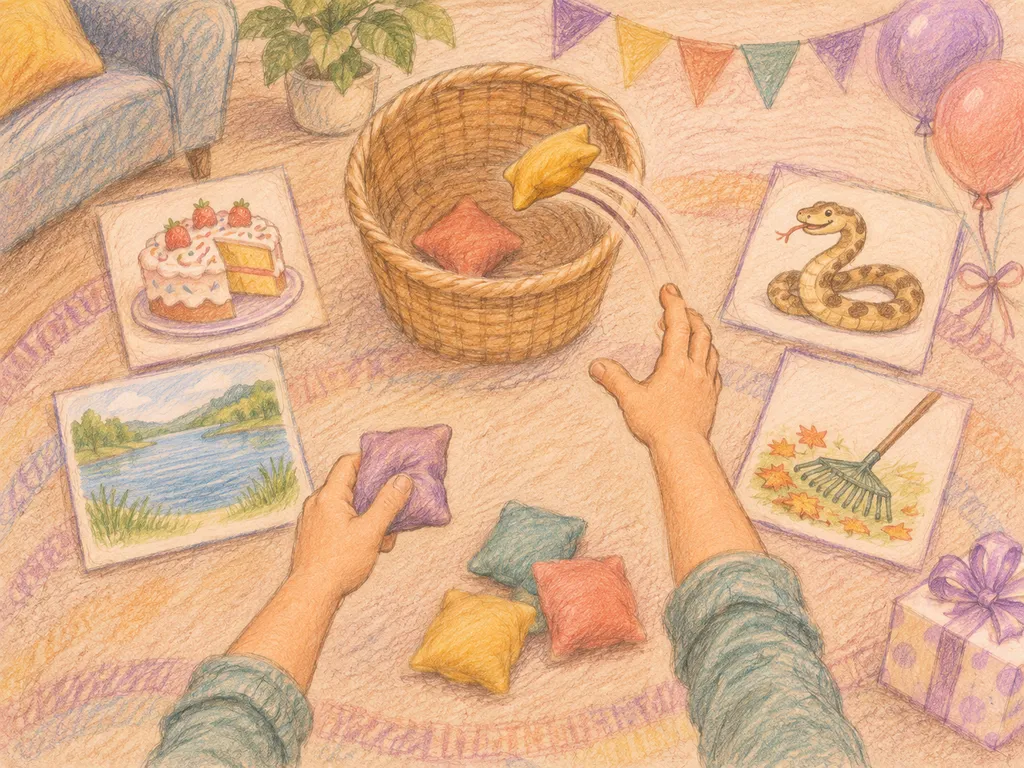
For school-age kids, keep sessions physical and brief. Place picture cards for cake, lake, rake, and snake on the floor. Say a word and ask your child to step beside its picture. Next, say two words and ask whether they rhyme. Hearing the shared ending matters more than writing every word.
For school-age kids, turn -ake Word Family for Kids: Words and Activities practice into word building. Write -ake on one card and prepare m, t, l, r, sh, and sn cards. Join them into real words, then sort them into “one first sound” and “a blend or digraph.” Finish with two original sentences.
For school-age kids, choose age-respectful tasks instead of early-reader games. Compare make, maker, and making, or find cake inside cupcake and pancake. Ask the learner to write an instruction, message, or comic caption containing three target words. Older beginners need direct phonics paired with suitable interests and thinking skills.
A Short Practice Routine
A -ake Word Family for Kids: Words and Activities routine takes five to ten minutes. Start with listening, continue with word building, and end with one sentence. The next day, request two remembered words before showing cards. Retrieval reveals what the child recalls without a prompt.
Five-minute Word Sort
Write bake, back, lake, lack, rake, rack, snake, and snack on separate slips. Ask your child to sort them by vowel sound. Read each group, then choose one -ake word for a spoken sentence. If a word is misplaced, compare the endings and try again.
Across LearnLink lessons, our tutors connect familiar words with one new demand: a more precise sound, longer phrase, or independent spelling. Families can follow this principle at home. Keep most words familiar, change one task element, and stop while attention remains strong.
Common Mistakes and How to Correct Them
One mistake is reading cake like back. Cover the final e, read cak as a temporary sound model, then uncover e to show the change. Use a true contrast such as lack–lake. Avoid stories about e making a “talk” or “jumping over” letters if they hide the sound pattern.
Another mistake is separating a blend too slowly: s-n-ake may gain a vowel between s and n. Model sn as one smooth start, pause, and add -ake. If your child says snake-uh, model a clean final /k/ and request a quiet finish. Correct accent differences only when they obscure the word.
Children may read a word correctly without understanding it. Ask them to choose a picture, show an action, or create a new phrase. Keep spelling practice equally measured. If multiple words remain difficult, return to make, take, and cake before adding cards. A secure core supports later patterns such as -ame and -ate.
- Practice five -ake words aloud with children aged six to eight.
- Use one picture book to spot cake, lake, make, and take.
- Correct vowel sounds by stretching the long a before blending each word.
- Compare bake and back, then ask your child to explain the difference.
- Repeat two missed words in a playful three-minute review tomorrow.
When a word has several meanings or pronunciations, Cambridge Dictionary is a useful check before turning it into child-friendly examples.
Frequently Asked Questions
How Many -Ake Words Should My Child Learn at Once?
Begin with four or five understood words, such as make, take, cake, lake, and wake. Use the -ake Word Family for Kids: Words and Activities list as a menu, not a one-session test. Add two or three words when your child reads the first set in mixed order and uses some words in phrases.
Is Every Word Ending in -Ake Pronounced in the Same Way?
The phonics words in this guide share the /eɪk/ ending, including bake, make, take, lake, and snake. English also contains words shaped by different histories and uses. Sake in “for the sake of” rhymes with cake, while the borrowed Japanese drink name is commonly pronounced differently. Exclude it from an early set.
What If My Multilingual Child Mixes English Sounds with Another Language?
Treat the difference as information, not failure. Let your child watch the mouth, hear the word twice, and compare it with a known English word such as make. A home language supports meaning even when its sound system differs. Aim for understandable speech without erasing the child’s natural accent.
When Is My Child Ready for Another Word Family?
Move on when your child reads multiple -ake words outside a fixed order, spells a few from dictation, and uses them in short phrases. Perfect speed is unnecessary. Keep two familiar -ake words in later reviews while introducing -ame, -ate, or contrasting -ack. Spaced review keeps the spelling pattern accessible.
- Start with four or five familiar words and check that the child understands each meaning.
- Practice hearing, building, reading, and spelling the same words before adding harder blends.
- Review two familiar words on another day and ask for one original sentence to strengthen recall.
If your child needs steady speaking practice, start small — choose a trial lesson.
Stay updated on our latest tips and resources by following us on Instagram LearnLink.